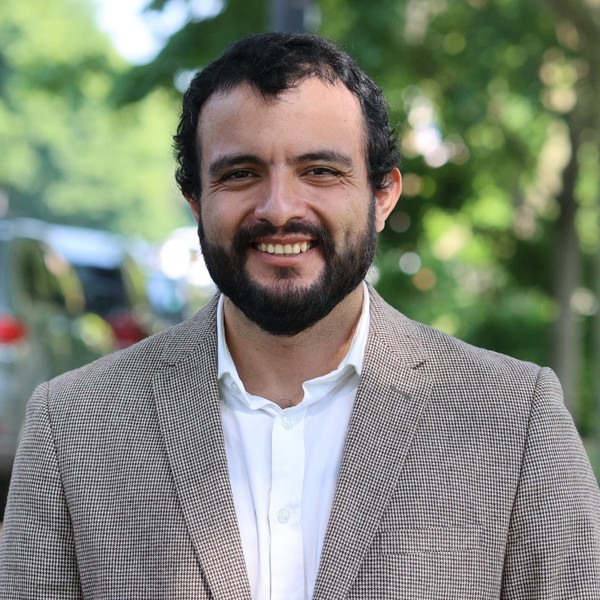
Carlos César Chávez Padilla
Development Economist · University of Chicago
Recent Research
Selected Recognition
Research discussed
National Affairs —Selected for Findings, the daily roundup of academic studies. —April 2026
"The Macroeconomics of Asymmetric Automation" and "Robots Reinstate, AI Doesn't"
Writing selected and discussed
Arnold Kling — In My Tribe —Discussed the essay and responded to its argument. —March 2026
Martin Anota — Annotations —Published a French translation of the essay, "Les contributions de Christopher Sims a la macroeconomie". —March 2026
Marginal Revolution —Tyler Cowen selected the essay for Wednesday assorted links. —February 2026
World Bank — Development Impact —David McKenzie summarised and discussed the essay in the blog's weekly links. —January 2026
Used in teaching
Claremont Graduate University —Robert Klitgaard included the essay as a reading in PP338, Policy Design and Implementation. —Spring 2026
On Causality: A History of How Economics Learned to Think About Cause and Effect
Public and policy discussion
El Universo —Manuel del Valle's column "El amestizamiento del Perú" discussed the paper's findings on ethnic income gaps. —October 2022
RPP —The column "Desigualdad, percepciones y realidades" drew on the paper's estimates of ethnic income gaps. —September 2022